
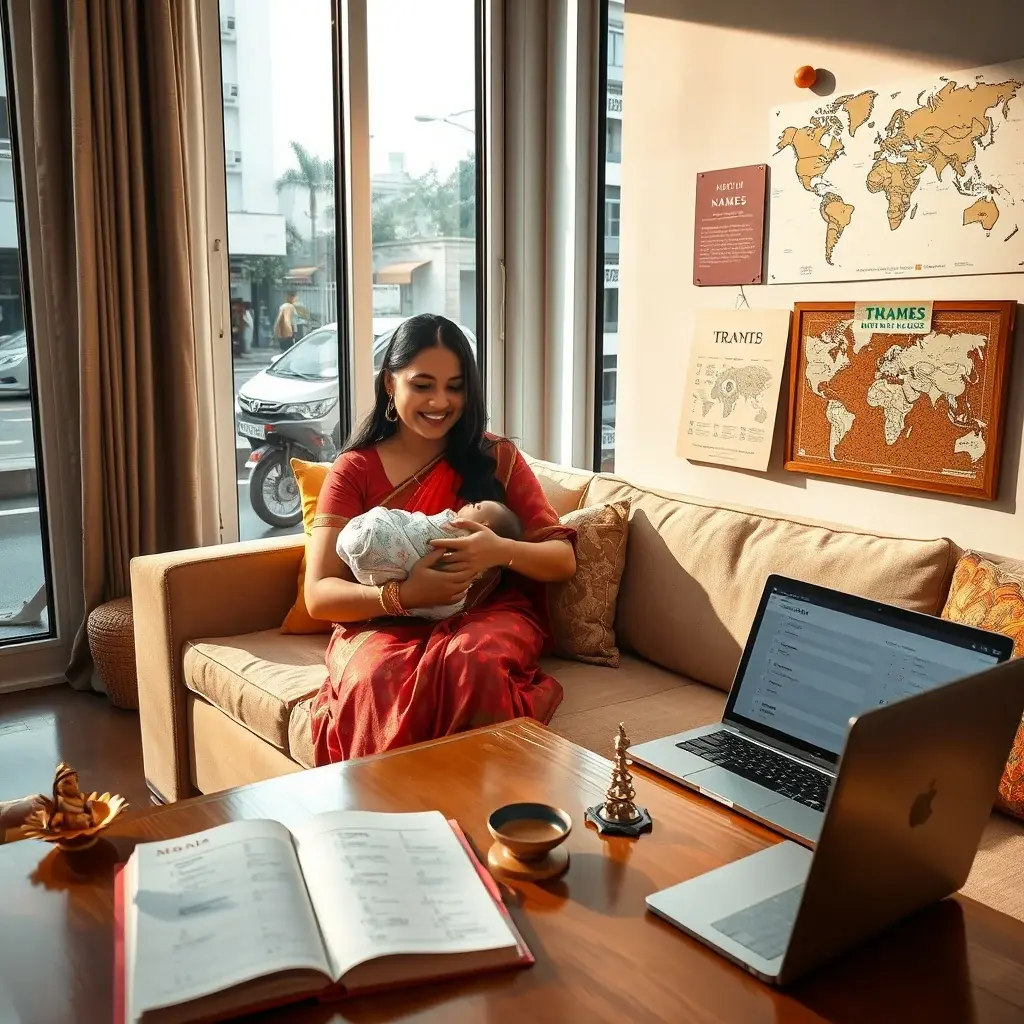
It was a rainy Tuesday in Mumbai when Meera, a first‑time mother with a PhD in molecular gastronomy, stared at a blank notebook and whispered, “What on earth do we call this tiny tyrant?” Across the ocean, Raj, a software architect in Toronto, was scrolling through a spreadsheet of Sanskrit roots while his wife, Priya, rehearsed lullabies in both Punjabi and Portuguese. The universe, it seemed, had conspired to give them the same problem: a name that would be both a cultural love‑letter and a pronunciation‑friendly passport stamp.
Setup
Enter the bustling world of Indian naming, where every syllable is supposedly steeped in myth, astrology, and the occasional family feud. In the cramped kitchen of Meera’s apartment, the aroma of masala chai mingled with the sharp scent of fresh ink as the couple debated between “Aarav” – the ever‑popular ‘peaceful’ – and “Vikramaditya,” a name that could double as a royal title or a password for a government portal. Meanwhile, in a sleek Toronto condo, Raj and Priya consulted a Google‑translated Vedic chart, a YouTube video titled “Top 10 Indian Names That Won’t Kill Your Child’s Social Life,” and a well‑meaning aunt who insisted that “Kavya” was the only dignified option because it rhymed with “caviar.”
Rising Action
The tension rose like the froth on a perfectly poured latte. Meera’s mother called, demanding a name that honored the family’s great‑grandfather, who was allegedly a warrior‑poet who never missed a cricket match. Raj’s brother, a self‑declared “name guru,” sent a meme of a baby wearing a crown with the caption, “Name him ‘Maharaja’ and watch him rule the playground.” Both couples felt the weight of centuries, diaspora expectations, and the ever‑looming threat of mispronunciation at the kindergarten drop‑off. The stakes were high: choose a name that would survive the tongue‑twisters of a kindergarten teacher, the teasing of a teenage cousin, and the occasional Instagram hashtag #NamasteNamaste.
Key Insights
After a marathon of Googling, consulting aunties, and a brief existential crisis, a pattern emerged. Meaningful Indian names can be distilled into three pragmatic criteria:
1. Etymological Elegance: Pick a root that carries a clear, positive meaning. “Anaya” (“caring” or “without a superior”) beats “Aakash” if you’re worried about the latter being confused with a cloud‑service provider. Look for names that are short enough to fit on a birthday cake but long enough to sound regal on a LinkedIn profile.
2. Phonetic Friendliness: Test the name on a non‑Indian friend. If they can say it without sounding like they’re ordering a dish at a restaurant, you’re good. “Isha” rolls off the tongue, while “Vishwajit” often becomes “Vish‑what‑jit?” in the mouths of well‑meaning teachers.
3. Cultural Roots with a Modern Twist: Blend tradition with trend. Names like “Riya” (meaning “singer”) feel contemporary, while “Lakshya” (meaning “goal”) offers a motivational punch. Even better, choose a name that has a pleasant meaning in another language – “Mira” means “wonder” in Latin and “ocean” in Sanskrit, making it a global citizen’s dream.
Armed with these criteria, Meera and Raj each compiled a shortlist. Meera’s favorites: “Aria” (air, melody), “Ishaan” (the sun’s direction), and “Tara” (star). Raj’s shortlist: “Nikhil” (complete), “Rohan” (ascending), and “Kiran” (ray of light). Both lists passed the “can‑my‑grandma‑pronounce‑it?” test, which is the ultimate litmus in Indian families.
Resolution
On a breezy Sunday, the two families met via video call, each displaying a hand‑drawn chart of names, complete with doodles of suns, moons, and the occasional cricket bat. After a spirited debate that involved quoting ancient epics, quoting Bollywood song lyrics, and a brief argument about whether “Sanjay” was too ‘90s, they reached a consensus. The baby would be named “Aria Nikhil,” a harmonious blend of melody and completeness, easy on the ears of a Delhi preschool teacher and a Toronto daycare director alike. The name was celebrated with a virtual toast of chai and maple syrup‑infused lassi, sealing the deal with the kind of cross‑continental camaraderie that only modern parenting can produce.
Takeaway
If you’re an Indian parent—whether you’re navigating the bustling lanes of Delhi or the quiet suburbs of Vancouver—remember that a great name is less about ancient prestige and more about everyday usability. Prioritize clear meaning, test the pronunciation on a friend who doesn’t speak Hindi, and don’t be afraid to sprinkle a dash of modern flair. In the end, the name you choose will be the first story you tell your child about who they are, and that story should be as witty, warm, and wonderfully inclusive as the family that chose it.