
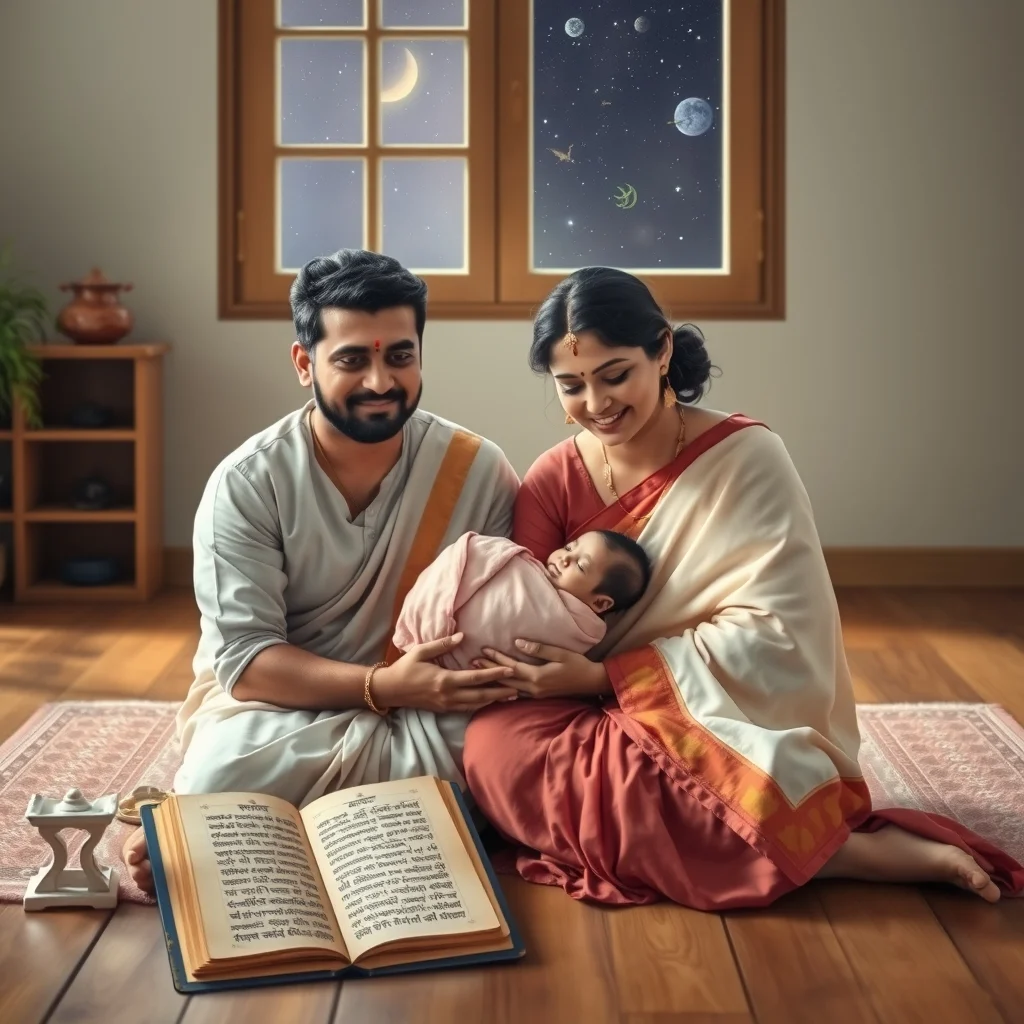
Indian parents have long treated naming a child as a rite of passage, a moment where language, mythology, and destiny intersect. In today’s fast‑moving world, the pressure to pick a name that honors tradition while feeling fresh can be overwhelming. This guide cuts through the noise by examining the linguistic roots of popular names, the celestial cues of Nakshatra and Rashi, and the latest data on what’s trending versus what remains rare.
Why Etymology Matters in Naming
At its core, a name is a story condensed into a single word. Sanskrit, the ancient language that underpins most Indian names, is a reservoir of meaning. For example, the name Arjun derives from the root arj, meaning “to shine” or “to be bright,” echoing the heroic archer of the Mahabharata whose moral clarity lit the battlefield. When parents understand such etymology, they give their child a built‑in compass for identity.
The Sanskrit Roots
Consider Vidhatri, a name that blends vid (knowledge) with tri (to protect). The compound literally translates to “one who safeguards wisdom,” a fitting wish for a child expected to become a lifelong learner. Similarly, Kavya stems from kavi (poet) and carries the connotation of lyrical beauty. These layers of meaning are not mere ornamentation; they act as a cultural anchor that parents can reference throughout a child’s upbringing.
Mythic Echoes
Mythology adds another dimension. Names like Gauri (another name for the goddess Parvati) invoke the nurturing aspect of the divine mother, while Rudra (a fierce form of Shiva) conveys strength and transformative power. When a name is tied to a deity or epic hero, it instantly becomes a conversation starter, allowing families to pass down stories that reinforce values and cultural pride.
Nakshatra and Rashi: Celestial Guides
Beyond linguistic roots, many Indian families consult the child’s birth Nakshatra (lunar mansion) and Rashi (zodiac sign) to fine‑tune the name’s phonetics. For a baby born under the Nakshatra Mrigashira, the syllable “Mi” or “Mu” is traditionally favored, aligning the child’s identity with the star’s energetic signature. This practice is not superstition alone; it reflects an ancient belief that the cosmos imprints a subtle rhythm onto a newborn’s life path.
When a child’s Rashi is Vrishabha (Taurus), names ending in “a” or “aa” such as Vasudha (earth) are considered auspicious, reinforcing the sign’s grounding nature. By weaving these astrological cues into the naming process, parents create a holistic narrative that links personal identity to the larger universe.
Trending vs Rare: Data‑Driven Choices
Modern parents also scan social media and baby‑name databases to gauge popularity. According to a 2023 analysis of Indian birth registries, names like Aarav and Advait have surged, appearing in over 12% of newborns nationwide—making them “trending.” Conversely, Vidhatri and Kshiraj (meaning “king of milk,” a poetic reference to nourishment) each register below 0.2%, classifying them as rare gems.
Choosing a trending name can offer a sense of belonging, but a rare name often provides a distinctive edge, reducing the likelihood of a child sharing it with classmates. Parents can strike a balance by selecting a name with a familiar root but an uncommon suffix, such as Ritvij (a variant of Ritwik, meaning “priest of the rites”). This strategy respects cultural continuity while preserving individuality.
Data also reveals regional patterns. In South India, names ending with “-esh” (e.g., Mahesh) remain popular, whereas in the North, names with the “-aan” suffix (e.g., Shauryaan) have risen sharply in the past five years. Understanding these nuances helps parents anticipate how a name will be perceived in different linguistic contexts.
Ultimately, the best name is one that resonates with the family’s values, honors linguistic heritage, and feels right for the child’s future. By blending etymology, celestial guidance, and contemporary trends, parents can craft a name that is both a personal blessing and a cultural statement, ensuring the child carries forward a legacy that feels both timeless and uniquely theirs.