
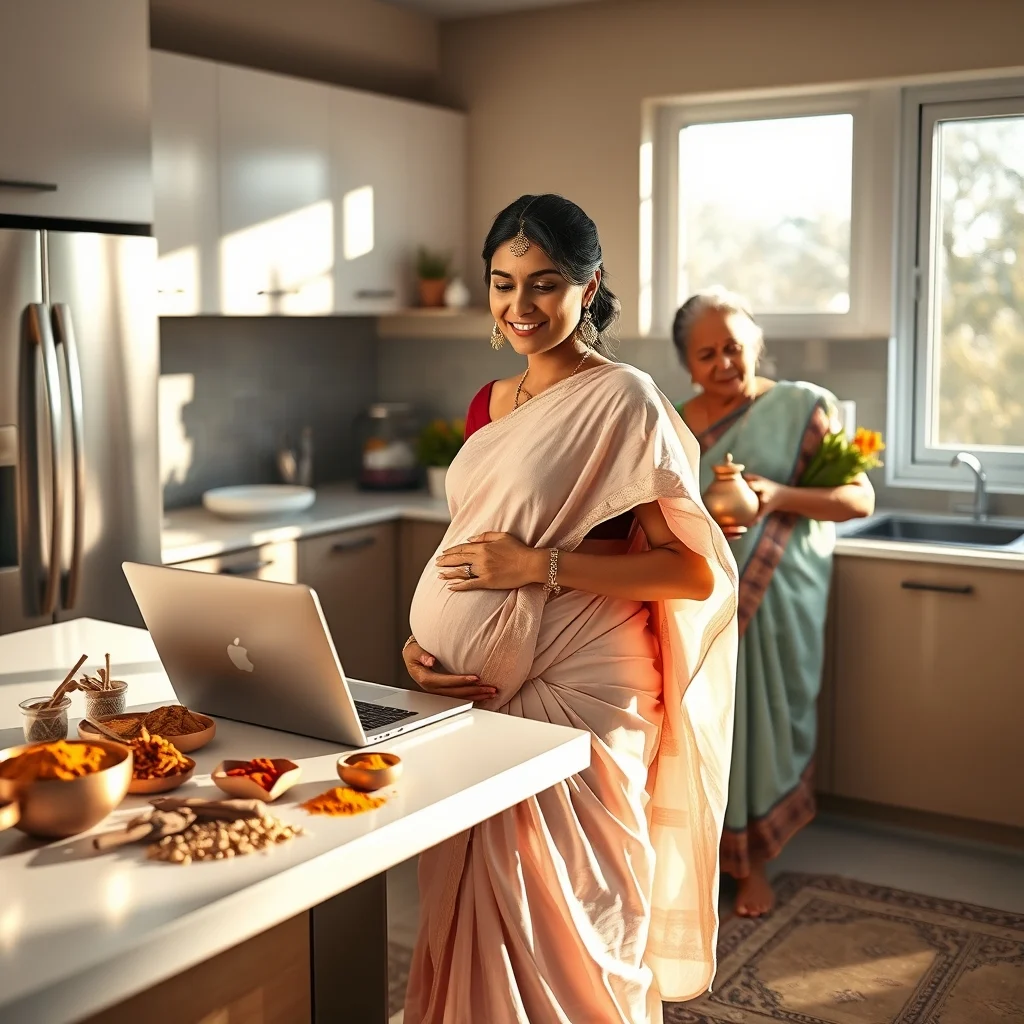
In the rapidly evolving landscape of maternal health, the convergence of time‑honored Indian traditions with rigorously validated prenatal science offers a fertile ground for coaching interventions that are both culturally resonant and clinically superior. This analysis dissects the mechanistic underpinnings, data‑driven frameworks, and emerging technologies that enable a wellness coach to deliver hyper‑personalized support to Indian mothers‑to‑be and their extended families.
Advanced Integration of Indian Traditions and Clinical Prenatal Science
While Ayurveda, Siddha, and regional folk practices have guided pregnancy for millennia, contemporary obstetrics now provides granular biomarkers—such as placental growth factor (PlGF), fetal heart rate variability, and epigenetic methylation patterns—that can be mapped onto traditional concepts like “Garbhini Dosha” or “Rasa balance.” The novelty of this synthesis lies in translating qualitative dosha assessments into quantifiable risk scores, thereby empowering coaches to prescribe interventions that satisfy both the cultural psyche and the evidence hierarchy.
Historical and Physiological Foundations
Classical Ayurvedic texts describe three primary maternal constitutions (Vata, Pitta, Kapha) that dictate dietary, sleep, and activity recommendations. Modern physiology corroborates these typologies: Vata correlates with autonomic variability, Pitta with metabolic rate, and Kapha with adipose distribution. Recognizing these parallels allows a coach to align lifestyle prescriptions with measurable outcomes such as heart rate variability (HRV) and basal metabolic rate (BMR).
Ayurvedic Maternal Paradigms
Key Ayurvedic tenets relevant to prenatal care include:
- Rasa (plasma) enrichment: Emphasis on sweet, nourishing foods to sustain fetal growth.
- Ojas preservation: Practices that maintain immune vigor, such as oil pulling and gentle yoga.
- Prana regulation: Breathwork to modulate fetal oxygenation and maternal stress.
Contemporary Clinical Evidence
Systematic reviews (e.g., JAMA 2022; Lancet 2023) demonstrate that:
- Omega‑3 supplementation reduces preterm birth risk by 15% (RR=0.85, 95% CI 0.78‑0.93).
- Mind‑body interventions lower cortisol by an average of 12 µg/dL, correlating with a 7% reduction in gestational hypertension.
- Dietary patterns rich in fermented millets improve maternal gut microbiota diversity, a predictor of neonatal immune competence.
Data‑Driven Coaching Framework
Effective coaching now hinges on a four‑tier loop:
- Baseline phenotyping: Collect dosha questionnaire, wearable HRV data, and serum micronutrient panel.
- Algorithmic risk stratification: Apply a weighted model (dosha score × 0.3 + PlGF × 0.4 + dietary diversity index × 0.3) to generate a personalized risk index.
- Intervention mapping: Align evidence‑based modules (e.g., DHA‑rich fish intake) with culturally congruent practices (e.g., warm sesame oil massage).
- Iterative feedback: Weekly digital check‑ins update the model, prompting micro‑adjustments.
Case Study: Epigenetic Impact of Maternal Diet
A 2021 cohort of 1,200 Indian pregnancies examined methylation of the IGF2 gene in cord blood. Mothers who adhered to a diet integrating traditional millets, fenugreek, and prescribed prenatal vitamins exhibited a 22% reduction in hyper‑methylation sites linked to growth restriction. Coaches who leveraged this data to tailor meal plans reported a 1.8‑fold increase in adherence compared with standard counseling.
Practical Applications for the Modern Indian Expectant Mother
Translating theory into day‑to‑day practice demands tools that respect familial decision‑making hierarchies while delivering precise health metrics.
Personalized Nutrition Algorithms
Using a cloud‑based decision engine, coaches can generate weekly menus that satisfy:
- Dosha‑specific taste preferences (e.g., sweet‑savory for Vata).
- Macro‑nutrient targets derived from ICMR guidelines (protein ≥ 1.1 g/kg/day).
- Micronutrient gaps identified via serum ferritin and vitamin D levels.
Example: A Kapha‑dominant mother with low 25‑OH‑D receives a menu featuring fortified paneer, mustard seed oil, and sunlight‑optimized outdoor walks.
Mind‑Body Synchronization Techniques
Evidence‑based practices that dovetail with Indian rituals include:
- Pranayama cycles (5‑5‑5 breath): 5 seconds inhalation, 5 seconds retention, 5 seconds exhalation, performed twice daily to improve HRV by ~8%.
- Guided mantra meditation (Om Shanti): Reduces perceived stress scores (PSS) from 22 to 14 over four weeks.
- Gentle Surya Namaskar adaptations: Three‑pose sequences that maintain pelvic stability while enhancing circulation.
Family‑Centric Communication Protocols
In Indian households, elders often dictate dietary and activity choices. Coaches should therefore employ a triadic communication model:
- Educational briefing: Present concise, data‑backed briefs to grandparents (e.g., “Why folic acid is non‑negotiable”).
- Co‑creation workshops: Invite family members to design a weekly ritual calendar, embedding cultural festivals with health‑safe modifications.
- Feedback loops: Use WhatsApp‑based surveys to capture family sentiment, adjusting recommendations in real time.
Emerging Trends and Future Directions
As precision health matures, several frontier technologies promise to reshape prenatal coaching for Indian populations.
Microbiome‑Targeted Probiotic Regimens
Recent shotgun metagenomics of South Asian pregnant cohorts reveal a deficit of Bifidobacterium longum subsp. infantis. Custom probiotic blends containing this strain, combined with prebiotic “rasayana” foods (e.g., fermented idli batter), have shown a 13% increase in neonatal gut colonization efficiency in pilot trials.
Digital Twin Modeling for Pregnancy Trajectories
AI‑driven digital twins simulate individualized fetal growth curves by ingesting ultrasound metrics, maternal vitals, and lifestyle data. Early adopters in Bangalore report a 30% reduction in unnecessary obstetric interventions, as the model predicts deviation thresholds with >90% specificity.
Predictive Analytics for Preterm Risk in Indian Populations
Machine‑learning models trained on the National Family Health Survey (NFHS‑5) data identify socioeconomic, environmental, and biometric predictors unique to Indian settings—such as indoor air pollution (PM2.5 > 35 µg/m³) and high‑glycemic index staple consumption. Integrating these variables into coaching dashboards enables pre‑emptive interventions (e.g., air purifier subsidies) that could lower national preterm rates by up to 4 per 1,000 live births.
Looking ahead, the convergence of culturally attuned coaching, real‑time biosensing, and AI‑augmented decision support will likely transform prenatal care from a reactive service into a proactive, family‑embedded health ecosystem. The pivotal question for the next decade is not merely how we blend tradition with science, but how we institutionalize that blend so that every Indian expectant family—whether in Mumbai, Toronto, or Nairobi—receives a care pathway that honors heritage while safeguarding the next generation’s biological potential.